


Dental Filling
Dental filling is direct dental restoration and can be applied immediately into tooth cavity. The good thing about dental filling is that can be done within single visit at Pattaya dental practice. The filling materials are made from dental amalgam, glass ionomers, resin ionomers and some resin composite fillings. Dentist @ Beach offers two choice of dental fillings.
White Filling or Tooth Colored Filling
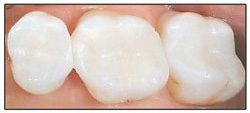
White filling is normally made of Glass ionomers. The material has translucent property, tooth-colored materials made of a mixture of acrylic acids and fine glass powders that are used to fill cavities, particularly those on the root surfaces of teeth. Glass ionomers can release a small amount of fluoride that may be beneficial for patients who are at high risk for decay. When the dentist prepares the tooth for a glass ionomer, less tooth structure can be removed; this may result in a smaller filling than that of an amalgam.
Glass ionomers are primarily used in areas not subject to heavy chewing pressure. Because they have a low resistance to fracture, glass ionomers are mostly used in small non-load bearing fillings (those between the teeth) or on the roots of teeth.
Resin ionomers also are made from glass filler with acrylic acids and acrylic resin. They also are used for very small, non-load bearing fillings (between the teeth), on the root surfaces of teeth, and they have low to moderate resistance to fracture.
Ionomers undergo high wear when placed on chewing area. Both glass and resin ionomers mimic natural tooth color but lack the natural translucency of enamel. Both types are well tolerated by patients with only rare occurrences of allergic response.
Cost: 700 to 1000 Thai Baht per surface
Amalgam Fillings or Mercury Filling
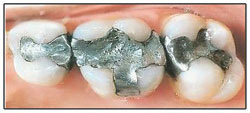
Amalgam filling is known to be used by dentists for over 100 years. Dental amalgam is the most thoroughly researched and tested restorative material among all those in use. It is durable, easy to use, highly resistant to wear and relatively inexpensive in comparison to other materials. For those reasons, it remains a valued treatment option for dentists and their patients.
Dental amalgam is a stable alloy made by combining elemental mercury, silver, tin, copper and possibly other metallic elements. Although dental amalgam continues to be a safe, commonly used restorative material, some concern has been raised because of its mercury content. However, the mercury in amalgam combines with other metals to render it stable and safe for use in filling teeth.
There is contradict about the safety of dental amalgam for mercury content. According to Major USA and international scientific and health bodies, including the National Institutes of Health, the U.S. Public Health Service, the Centers for Disease Control and Prevention, the Food and Drug Administration and the World Health Organization, including Pattaya Public health have been satisfied that dental amalgam is a safe, reliable and effective restorative material.
Cost: 600 to 900 Thai Baht per filling